NEWS
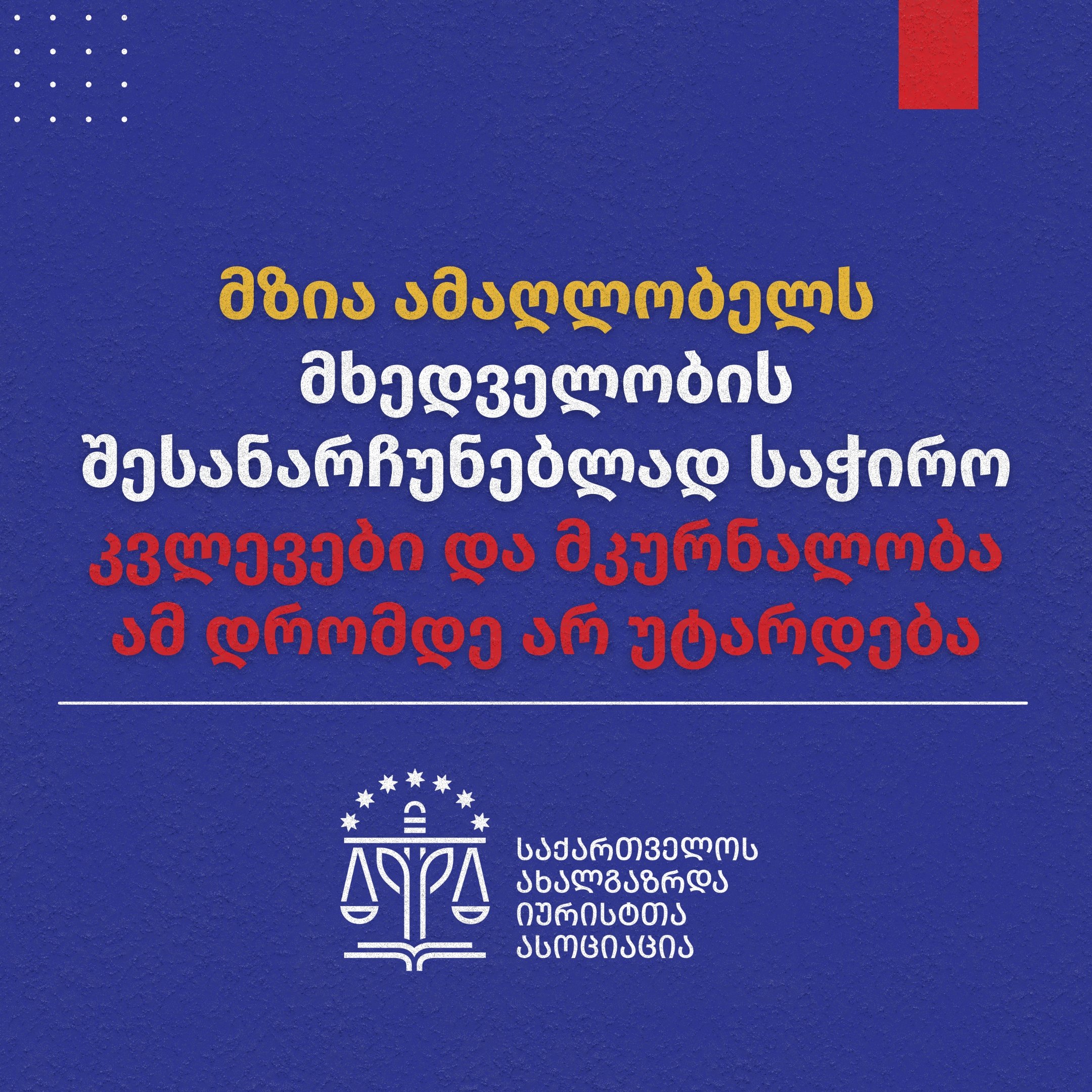
Following Mzia Amaghlobeli’s placement in the penitentiary facility, her eyesight significantly deteriorated and has reached an alarming level. Despite numerous requests, she has not been provided with the examinations necessary for planning treatment, nor has she received an appropriate medical consultation, which is essential for making an informed decision regarding treatment to preserve her vision.
In 2013 Mzia Amaghlobeli was diagnosed with keratoconus in her left eye, and, in order to regulate the progression of the disease, she underwent surgery in Turkey in 2013. As a result of the surgery, her vision in the left eye was preserved only at about 2%, however, her vision remained stable mainly due to the right eye. Given her existing diagnosis and condition, based on recommendations of doctors, Mzia Amaghlobeli, underwent examinations every 3-6 months at a relevant medical facility. In 2025, prior to being placed in the penitentiary facility, her vision in the right eye was approximately 30% (0.3), which, in the case of correction with glasses, could potentially increase up to 90%. After being placed in prison, her vision deteriorated critically. According to examinations conducted on 4 February 2025, her right eye’s vision could be corrected with glasses only up to approximately 60%. However, subsequent repeated testing conducted two days later revealed that her vision in the right eye had dropped to 0.1 (by 20% within a two-day interval), and at that time, correction with glasses was possible only up to 40%, instead of 90%, given her condition before imprisonment.
On 1 July 2025, Mzia Amaghlobeli’s lawyer requested the administration of the penitentiary facility to conduct high-tech eye examinations at an appropriate specialist clinic, proposing the “New Hospitals National Ophthalmology Center” or the “Caucasus Medical Centre.” Prior to her detention, Mzia Amaghlobeli had been receiving services from the “National Ophthalmology Center,” where her medical history is also stored. Notably, the letter emphasized that the cost of these examinations would be covered by the patient herself, and the state would not be required to pay additional expenses. In order to assess the progression of the disease, it is important to compare previous and current test results (topographic data). The progression of keratoconus cannot be assessed solely on the basis of functional deterioration of vision, as other causes, not keratoconus, may be responsible for vision impairment. Determining the cause of vision deterioration, it is critically important for selecting a treatment strategy, which to this day has not been undertaken.
Instead of the above-mentioned clinics, Mzia Amaghlobeli was transferred for examinations to the clinic “Mzera,” selected by the administration of the prison. As a result of these examinations, she was diagnosed with grade IV keratoconus in the left eye and grade I-II keratoconus in the right eye, as well as myopic astigmatism. At the time of the examination, her vision in the left eye was 0.01, which could not be corrected, and in the right eye - 0.1-0.2. A medical recommendation was issued only regarding the stabilization of vision in the right eye, while no recommendation was given concerning the left eye, whose vision, according to the same conclusion, was only 1%. It is noteworthy that, according to Mzia, she was not provided with any explanation about the cross-linking procedure, nor about its potential effectiveness or associated risks at the clinic. Due to this, Mzia Amaghlobeli notified the administration of the prison following:
“…the provider clinic of your facility - „Mzera“ does not possess the modern/required equipment and its conducted examinations could not demonstrate a comprehensive picture. Moreover, the doctor from clinic „Mzera”, who issued the recommendation, has not talked to me. My questions regarding what risks the recommended manipulation on the eye involves and what the potential outcome would be, remain without answer. I understand that there are no guarantees in the medical sphere, and, accordingly, none of them are issued and I do not expect any. However, considering the fact that only in one eye (the right) do I retain the degree of vision that enables me mainly, with the use of glasses, to read, I am obliged to be more cautious in making decisions. I consider it possible to preserve and/or improve my vision based on my medical history in a clinic equipped with modern technology, where doctors have experience in treating patients with a keratoconus diagnosis.”
Despite medical assessments that clearly demonstrate the alarming deterioration of Mzia Amaglobeli's vision during her stay in prison, the penitentiary facility has not taken any effective measures to plan adequate examinations and appropriate treatment, nor has the cause of such a dramatic deterioration of vision been identified. It is important to identify the cause of vision deterioration and to promptly plan necessary treatment, because treatment carried out after the progression of the disease will be less effective. Accordingly, timely examination and planning of treatment is critically important. It is noteworthy that the statements submitted by Mzia Amaghlobeli’s lawyer, Maia Mtsariashvili, to the Medical Department of the Penitentiary Service and to the Minister of Justice on 13 August, 8 September, 13 October, and 13 November 2025 regarding the provision of appropriate medical services for Mzia Amaghlobeli remain without answer to this day. It is also unknown to us whether her vision has further deteriorated since the last examinations, considering that it was already at a critical level at the time of the most recent tests.
When imposing deprivation of liberty, the state has a special obligation to care for the individual. Persons in such conditions have no other option but for the state to ensure the protection and support of their health. For the protection of the right to health, international law obliges states not only to ensure adequate conditions of detention, but also, where necessary, to provide individualized medical assistance. This obligation has been ignored in relation to Mzia Amaghlobeli. In addition to her liberty, Mzia Amaghlobeli has been deprived of the right to undergo examinations in a clinic equipped with medical technology compatible with her diagnosis, to receive information, based on proper examinations, what procedures are necessary to preserve her vision at a minimal level, what medical consequences the chosen treatment entails, what health risks are expected, whether there are alternative treatment options, and what possible risks are associated with refusing medical care. Accordingly, Mzia Amaghlobeli has been deprived of the right to make an informed decision regarding treatment aimed at preserving her vision and, consequently, the right to health.
In light of the current situation, we address:
The Minister of Justice of Georgia, Paata Salia, to immediately ensure that Mzia Amaghlobeli undergoes appropriate high-tech examinations on both eyes in a properly equipped medical facility (“New Hospitals National Ophthalmology Center” or “Caucasus Medical Centre”) and, based on the examinations, that treatment is planned to preserve her vision.
The Public Defender of Georgia, Levan Ioseliani, to promptly provide a written assessment as to whether the state has fulfilled its obligation to ensure access to adequate medical treatment for Mzia Amaghlobeli. Including, if necessary, engaging medical experts with appropriate specialization in preparing the assessment, in accordance with his mandate.
SHARE: